In the rapidly evolving world of decentralized finance (DeFi), yield farming has emerged as a popular strategy for cryptocurrency investors seeking to maximize their returns. Yield farming, also known as liquidity mining, involves lending or staking your cryptocurrency assets in DeFi protocols to earn rewards, typically in the form of additional cryptocurrency. With the right approach, yield farming can be a highly lucrative endeavor. This article aims to explore innovative yield farming strategies that can help you maximize profits while minimizing risks.
Understanding the Basics of Yield Farming
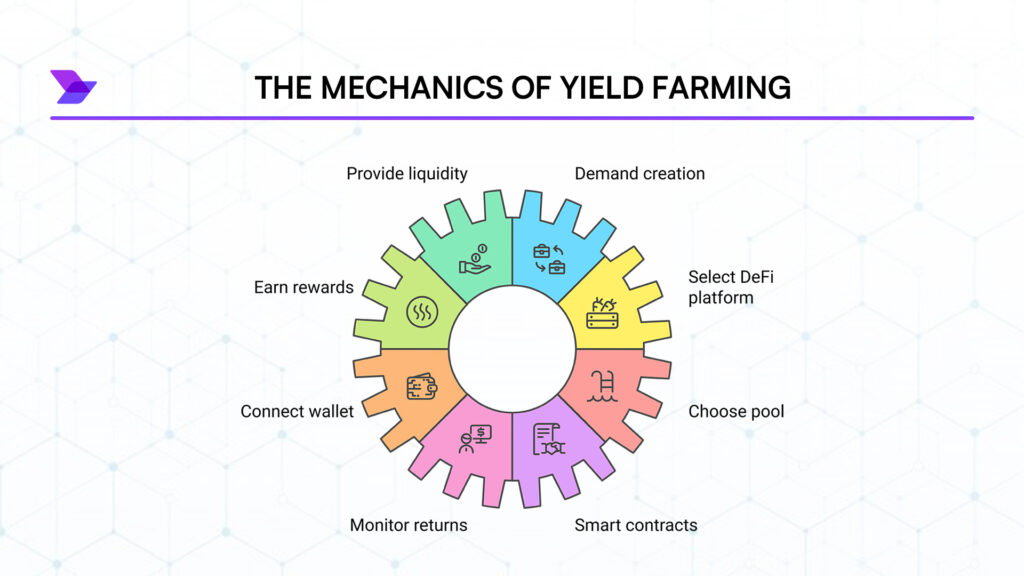
Yield farming is a strategy that leverages smart contracts on blockchain networks to facilitate the lending, borrowing, and staking of cryptocurrency assets. By participating in yield farming, investors can earn interest, fees, and other rewards in exchange for providing liquidity to DeFi platforms. The process typically involves three main components: liquidity providers, liquidity pools, and yield farming platforms.
– **Liquidity Providers**: These are individuals or entities that deposit their cryptocurrency assets into liquidity pools. In return, they receive a portion of the transaction fees and yield farming rewards generated by the platform.
– **Liquidity Pools**: These are pools of cryptocurrency assets used to facilitate trading on decentralized exchanges (DEXs) and other DeFi platforms. They are crucial for maintaining liquidity and enabling seamless transactions.
– **Yield Farming Platforms**: These are DeFi applications that offer yield farming opportunities. Examples include Uniswap, Aave, Compound, and Yearn Finance.
Innovative Yield Farming Strategies
1. Diversifying Across Multiple Platforms
One of the keys to successful yield farming is diversification. By spreading your assets across multiple yield farming platforms, you can reduce your risk exposure and increase your chances of earning higher returns. Diversification allows you to take advantage of different interest rates, reward structures, and platform-specific incentives. However, it’s essential to conduct thorough research on each platform’s reputation, security measures, and potential risks before investing.
2. Leveraging Automated Yield Farming Tools
Automated yield farming tools, also known as yield aggregators, can help investors optimize their yield farming strategies by automatically reallocating assets to the most profitable platforms. These tools use algorithms to analyze and compare yield farming opportunities in real time, ensuring that your assets are always deployed in the most efficient way possible. Popular yield aggregators include Yearn Finance, Harvest Finance, and Beefy Finance.
3. Exploring Cross-Chain Yield Farming
Cross-chain yield farming involves utilizing assets across multiple blockchain networks to take advantage of unique opportunities and incentives available on each chain. This strategy allows investors to access a broader range of yield farming platforms and maximize their returns. Cross-chain yield farming requires the use of interoperability solutions such as bridges and wrapped tokens to facilitate the movement of assets between different blockchains.
4. Participating in Initial Farm Offerings (IFOs)
Initial Farm Offerings (IFOs) are a novel way for cryptocurrency projects to raise capital and distribute tokens to yield farmers. By participating in IFOs, investors can earn new tokens at preferential rates and potentially benefit from their appreciation in value. This strategy involves providing liquidity to a project’s liquidity pool in exchange for early access to newly issued tokens. However, it’s important to conduct thorough due diligence on the project’s fundamentals and team before participating in an IFO.
5. Implementing Risk Management Techniques
While yield farming offers lucrative returns, it also comes with inherent risks, including smart contract vulnerabilities, impermanent loss, and market volatility. Implementing effective risk management techniques is crucial for maximizing profits while minimizing potential losses. Some strategies include:
– **Insurance**: Consider purchasing DeFi insurance to protect your assets against smart contract failures and other risks. Providers like Nexus Mutual and Cover Protocol offer coverage for various DeFi protocols.
– **Impermanent Loss Mitigation**: To minimize impermanent loss, consider providing liquidity to stablecoin pairs or using platforms that offer impermanent loss protection.
– **Portfolio Rebalancing**: Regularly monitor and rebalance your yield farming portfolio to ensure that your assets are allocated optimally and aligned with your risk tolerance.
Evaluating Yield Farming Opportunities
When evaluating yield farming opportunities, it’s essential to consider several factors to ensure you make informed investment decisions. These factors include:
– **APY and Reward Structure**: Analyze the annual percentage yield (APY) and reward structure offered by the platform. Higher APYs may indicate higher risk, so be sure to assess the associated risks before committing your assets.
– **Platform Security**: Assess the security measures implemented by the platform, such as code audits, multi-signature wallets, and bug bounty programs. A secure platform reduces the risk of hacks and exploits.
– **Protocol Reputation**: Research the platform’s reputation, team, and track record in the DeFi space. Established platforms with a history of successful operations are generally more reliable.
– **Community and Support**: Evaluate the platform’s community engagement and support channels. A strong, active community can provide valuable insights and assistance.
Conclusion
Yield farming presents a unique opportunity for cryptocurrency investors to maximize their profits by leveraging innovative strategies and advanced tools. By diversifying across multiple platforms, utilizing automated yield farming tools, exploring cross-chain opportunities, participating in IFOs, and implementing effective risk management techniques, investors can enhance their yield farming returns while mitigating potential risks. As the DeFi landscape continues to evolve, staying informed about the latest trends and developments is crucial for making informed investment decisions and capitalizing on emerging opportunities in the yield farming space.